(It’s Cecilia here.) Growing up, my parents were pretty forward thinking. My mom worked in the medical profession, so she made sure that we knew the proper anatomical names for our body parts. My parents even taught fertility awareness classes in our living room (slide projector, folding chairs, the whole setup).
But even with all of that… my parents didn't really talk to me about sex.
And when I became a mom? I wasn't sure when or how to start having “those” conversations with our own kids. The day our toddler pointed between their legs and asked, “Mom, what's that?” I completely froze. I answered with a slang term rather than the medically correct term. I chickened out.
Sound familiar?
If you've been putting off talking to kids about sex because you're not sure where to start (or you're worried about saying the wrong thing), you're not alone. Most of us didn't grow up with great models for these conversations. But here's what the research, and years of parenting, have taught me: talking to kids about sex isn't one big, awkward “talk.” It's an ongoing conversation that starts earlier than you think and evolves as your child grows.
And the good news? You don't have to be perfect at it. You just have to be willing to start.
This guide will walk you through exactly what to say at each age, how to handle the questions that might catch you off guard, and how to keep these conversations going in a way that actually strengthens your relationship with your child.
Why Talking to Kids About Sex Matters (Even When It's Uncomfortable)
Let's start with the fear most parents carry: “If I talk to my kids about sex, won't that encourage them to try it sooner?”
Research from the CDC consistently shows the opposite. Open parent-child communication about sex is associated with teens delaying sexual activity, using protection more consistently, and experiencing lower rates of STIs and unintended pregnancies.
Your willingness to have these conversations doesn't speed things up. It actually helps your child make more informed, thoughtful choices when the time comes.
And here's something that might surprise you: these conversations are also one of the most powerful tools for protecting your child from sexual abuse. Children who know the correct names for their body parts, who understand what safe and unsafe touch looks like, and who trust that they can come to you without getting in trouble… those kids are significantly harder targets. As sex educator Amy Lang puts it, these conversations are fundamentally about health and safety, and they prepare kids for one of the biggest and most important parts of life.
Birth to Age 4: Build the Foundation With Real Words and Safe Touch
This is the stage where you lay the groundwork for every conversation that comes later. And honestly? It's the easiest time to start, because young children have zero shame about their bodies. That's our baggage, not theirs.
Use real anatomical names from day one. During diaper changes and bath time, name body parts the same way you'd name an elbow or a knee: “I'm going to wipe your vulva now.” “Let me wash your penis.” It might feel awkward the first few times. That's okay. The more you say the words, the more normal they become… for both of you.
Why does this matter so much? Children who know and use correct terminology for their body parts are better protected against sexual abuse. As legendary Canadian sex educator Meg Hickling taught throughout her career, children who can accurately name their body parts are more likely to be believed if they ever need to report something, and predators are more likely to avoid kids who clearly have this language.
Introduce the concept of consent through everyday moments. You don't need a lesson plan for this. Just look for the small opportunities that are already there:
When your child says “stop tickling me,” you stop… even if they're laughing. Then check in: “Do you want more, or are you all done?”
When it's time to say goodbye to Grandma, offer choices instead of instructions: “Would you like to give Grandma a hug, a high five, or blow her a kiss?” If your child says “nothing,” that's okay too.
Before picking up your toddler, narrate what you're about to do: “I'm going to pick you up now.”
These moments might seem tiny. They're not. They teach your child that they are the boss of their body, that their “no” has power, and that the adults in their life will respect it. That is the foundation of consent… and it starts long before anyone is talking about sex.
Teach the basics of body safety. By age three or four, your child can understand simple safety rules. Try language like:
“Your private parts are the parts covered by your bathing suit. Those parts are just for you.”
“No one should ask to see or touch your private parts, and no one should show you theirs. If that ever happens, come tell me. You won't be in trouble.”
“We don't keep secrets about bodies. If someone tells you to keep a secret about touching, that's a sign to come tell a safe grown-up right away.”
This last point matters enormously. Most abuse relies on secrecy, not force. Teaching your child that body secrets are always worth telling is one of the most protective things you can do.
Ages 5 to 8: Answer Their Questions (Yes, Even the Awkward Ones)
This is the age when the big questions start rolling in. “How are babies really made?” “Why does that man have hair on his chest?” “What does [word they heard on the bus] mean?”
When these questions come, try to treat them like any other question your child asks. Take a breath. Stay calm. If you look embarrassed, they'll feel embarrassed, and they'll learn that this is a topic that makes people uncomfortable, which means they'll stop coming to you.
Here's a practical approach that works really well:
First, ask what they already know. “That's a great question. What have you heard about that?” This gives you a starting point and lets you correct any misinformation without over-explaining.
Then, answer honestly using simple, age-appropriate language. You don't need to be graphic… just truthful. For example:
“How are babies made?” → “When a grown-up man and a grown-up woman decide to make a baby together, a tiny cell called a sperm from the man joins with a tiny cell called an egg inside the woman's body. That's how a baby starts growing.”
“What does [sexual slang word] mean?” → Stay calm (even if you're screaming internally). “That's a word that means [simple explanation]. It's not a word we use because it's not respectful. I'm glad you asked me though. You can always ask me about words you hear.”
“Why does my body feel funny when I touch myself there?” → “That's normal. Your body has lots of nerve endings and some parts are more sensitive than others. That's something you do in private, like in your bedroom.”
Notice the pattern: no shame, no panic, no deflecting. Just honest, matter-of-fact information delivered calmly.
Start talking about different kinds of families and identities. Kids this age are naturally curious about why families look different, why some people love differently, and what it means when someone doesn't fit neatly into “boy” or “girl.” You don't need all the answers. Simple, warm responses go a long way:
“Some families have a mom and a dad. Some have two moms or two dads. Some have one parent or a grandparent. What matters is that people in a family love and take care of each other.”
“Most boys feel like boys and most girls feel like girls. But some people feel different on the inside than what their body looks like on the outside, and that's okay too.”
Your openness here doesn't just teach inclusivity… it also tells your child that whatever they're feeling about their own identity is safe to talk about with you.
We’ve already said this but it’s worth keeping in mind: staying calm during these conversations is half the battle. If your child asks something that makes your stomach flip and you visibly panic, they learn that this topic makes adults uncomfortable… which means they stop coming to you. The trick is having a plan for what to do with your big feelings before they show up.
Our free Calming Plan is a printable tool you can fill out as a family. You each pick your own go-to calming strategies (organized by what works for your senses, your body, and your brain), so that when feelings hijack your lower brain and disconnect you from the part that does the reasoning and problem-solving, you already know what to reach for. It's a great foundation for all the hard conversations in parenting… this one included.
Ages 9 to 12: Go Deeper Before the World Does It for You
Here's where the stakes get higher. By the time your child enters middle school, they should have a solid understanding of most topics relating to sex and sexuality. Not because you're rushing them… but because the world won't wait for you to be ready.
Talk about puberty before it starts. Don't wait for signs. By age eight or nine, start talking about the changes that are coming… for all bodies, not just the one your child has. Kids should understand both what will happen to their own body and what their peers will experience. This reduces anxiety, prevents surprise, and builds empathy.
Try: “Over the next few years, your body is going to start changing in some big ways. This is called puberty, and it happens to everyone. Some changes happen on the outside, like growing taller and getting body hair. Some happen on the inside, like new feelings and moods. I want you to know what to expect so nothing catches you off guard.”
Address pornography before the internet does. The average age of first exposure to pornography is around 9 years old. Not 14. Not 16. Nine. Your child will almost certainly encounter explicit content, whether they go looking for it or not.
For younger kids in this range, you can say: “Sometimes people come across pictures or videos online that show grown-up bodies doing sexual things. That's called pornography. It's not for kids, and if you ever see something like that, I want you to come tell me. You won't be in trouble. I just want to help you understand what you saw.”
For older tweens: “Porn shows sex in a way that isn't real. It's performed and exaggerated, kind of like how action movies don't show what a real fight looks like. It doesn't show what respect, consent, or love actually look like in a relationship. I'd rather you hear that from me than figure it out on your own.”
Teach consent as a skill, not just a concept. At this age, consent conversations should get more specific. Consent educator Mike Domitrz teaches that asking first (whether it's for a kiss, a hug, or anything else) isn't awkward… it's respectful. And it's a skill that takes practice.
You can practice this at home in low-stakes ways. Before borrowing your tween's phone, ask. Before sharing something about them with another adult, check: “Is it okay if I tell Aunt Lisa about your project?” Model asking for consent in your own relationships so your child can see what it looks like in action.
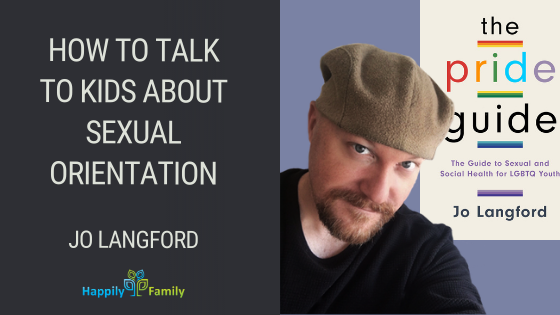
If you're parenting a teen (or heading there soon), we created something for exactly this stage. The free Parent Teen Connection Conference is a 5-day online event featuring over 25 experts, and Day 4 is entirely dedicated to sex and safety… with presentations from Amy Lang on how and when to talk to kids about sex, Mike Domitrz on teaching sexual consent and communication, Stephanie A. Brill on supporting kids on the gender spectrum, and Jo Langford on supporting LGBTQ+ youth. The other days cover the teen brain, mental health, digital life, and setting limits while staying connected. It's free to attend and designed to give you practical strategies you can use right away.
Teens (13+): Keep Talking, Even When They Roll Their Eyes
Your teenager may act like they want nothing to do with you when it comes to these topics. That's developmentally normal. Keep talking anyway.
By now, conversations should cover the full picture: all forms of birth control and how to access them, the real risks of unprotected sex, the legal realities of consent and sexting, and what healthy, respectful relationships actually look and feel like.
Don't just talk about danger. Talk about the good stuff too. Studies show that when American parents talk to their children about sex, the conversation is mostly about risk (contraception, disease, protection). But Dutch parents also talk about how to balance joy, pleasure, and responsibility. This stuck with me. Our kids need to hear that sexuality, within the context of healthy relationships, is a natural and positive part of being human. Not just scary. Not just risky. Also joyful and connecting.
Try: “I know we've talked a lot about being safe and making good choices. I also want you to know that when the time is right and you're with someone you trust, physical intimacy can be a really wonderful part of a relationship. I want that for you someday.”
Create a “no judgment” policy. Let your teen know, explicitly and more than once: “If you ever have a question, or if something happens and you're not sure what to do, you can come to me. I might have feelings about it, but I will always help you first. You won't be punished for being honest with me.”
This doesn't mean you abandon your values. It means your child knows that your love and support aren't conditional on them making perfect choices.
If you haven't started yet, it's not too late. If your child is already 12 or 15 and you've never had these conversations, you can still begin. Try something like: “You know, I realize I've never really talked to you about some of this stuff, and I'm sorry about that. It's not because it's not important… it's because I wasn't sure how to bring it up. But I want to start now, even if it feels a little awkward for both of us.”
That kind of honesty models vulnerability and tells your teenager: This matters enough that I'm willing to be uncomfortable.
What to Do When You Don't Know What to Say
Even with good education and preparation, there will be moments that catch you completely off guard. Your five-year-old loudly asks about sex at the grocery store. Your nine-year-old asks a question you have no answer to. Your teenager tells you something that makes your stomach drop.
Here's your toolkit for those moments.
The "Buy Time" Script
You don't have to have every answer immediately. When you're caught off guard, try: “That's a really important question and I want to give you a good answer. Let me think about it and let's talk about it after dinner tonight.”
The key? You have to actually follow through. Coming back to the conversation is what builds trust. It tells your child: your question mattered to me, I didn't forget nor am I trying to avoid it.
The "Stay Curious" Approach
Before jumping into an answer, find out what prompted the question. “I'm curious, what made you think about that?” or “What have you already heard about that?” This does two things: it gives you a moment to collect yourself, and it tells you what your child actually needs to hear (which is often less than you think).
Weave In Your Family's Values
Every family brings their own values to these conversations… responsibility, respect, empathy, faith. Talking to kids about sex is one of the most powerful opportunities to share what matters to your family.
So when a conversation opens up, ask yourself: “What value do I want to weave into this moment?” Maybe it's honesty. Maybe it's respect for others. Maybe it's taking care of your body. Name it, and speak it simply: “In our family, we believe that being intimate with someone is about respect and trust, not just physical feelings.”
These values become a guide for your child's own sense of right and wrong. When the heavy stuff drops later in life, it's their internalized values (not yours) that will help them navigate those moments with confidence.
Keep Good Books Within Reach
You don't have to do this entirely on your own. Keep a few age-appropriate books around the house that your child can flip through on their own terms. Some trusted recommendations: It's Perfectly Normal and It's So Amazing by Robie Harris, Talk Sex Today by Meg Hickling and Saleema Noon, and the Birds + Bees + YOUR Kids guide by Amy Lang. Saleema Noon's “Body Science” programs are another excellent resource for families looking for inclusive, research-based sexual health education.
Books give kids a way to explore these topics at their own pace, and they give you natural entry points for conversation: “I noticed you were looking at that book the other day. Did anything surprise you or make you want to ask me something?”
If you want broader expert support and practical strategies for building connection with your child (on this topic and beyond), the Happily Family Conference brings together leading voices in child development and conscious parenting, all in one place.
Body Image, Gender, and the Bigger Picture
Talking to kids about sex doesn't stop at the mechanics of reproduction. It also means helping your child develop a healthy relationship with their own body and the emotional skills they need for healthy relationships down the road.
Model Healthy Body Image Out Loud
Research has shown that when children learn to see their bodies primarily through the lens of how they look to others, it negatively impacts their cognitive function and emotional well-being. But the good news is, you can actively counteract this at home.
Try saying things like: “My legs are tired today. They carried me on a really long walk and I'm grateful for that.” Or: “I love how strong your arms are getting from all that climbing.”
Celebrate what bodies do, not just how they look. Notice your child's physical strength, coordination, and effort as much as (or more than) their appearance. In a culture that constantly tells kids their value is tied to how they look, your voice is a powerful counterbalance.
If we expect children to grow into adults who can navigate relationships with respect and empathy, we need to give them emotional language starting young. That means moving away from “be strong” and “be a big boy” and toward naming feelings, building emotional intelligence, and practicing healthy communication.
A child who can say “I feel frustrated” or “That made me uncomfortable” has the foundation for every future conversation about boundaries, consent, and intimacy. This is how we raise kids who can eventually tell a partner what they want and don't want… not just in sexual situations, but in all relationships.
Support Who Your Child Is
For many parents, conversations about gender identity and sexual orientation can feel unfamiliar. That's okay. You don't need every answer. You just need your child to know that who they are is safe with you.
If your child comes to you with questions about their identity, or tells you something that surprises you, try to listen before you react. Organizations like Gender Spectrum and PFLAG offer resources for families navigating these conversations, and Stephanie A. Brill's books on supporting gender-diverse children has helped many families find their footing.
The most important thing you can say? “Thank you for telling me. I love you, and I'm here.”
FAQs About Talking to Kids About Sex
At what age should I start talking to my child about sex?
From birth. Start by using proper anatomical terms during diaper changes and bath time. By ages three to four, children are ready for simple, honest answers about where babies come from and the difference between boys' and girls' bodies. Starting early, when there's no shame or embarrassment attached, gives you practice while the stakes are low and builds a foundation of trust for every conversation that follows.
Will talking to my child about sex encourage them to experiment sooner?
No. Research consistently shows the opposite. Open parent-child communication about sex is associated with teens delaying sexual activity, using protection more consistently, and experiencing lower rates of STIs and unintended pregnancies. Education doesn't equal encouragement… it gives kids the information they need to make thoughtful choices.
What if my child asks a question I'm not ready for?
Say: “That's a great question. I want to give you a really good answer, so let me think about it, and we'll talk more tonight.” Then follow through. Coming back to the conversation shows your child that their questions matter and that you're a trustworthy source of information, even when the topic catches you off guard. If you need help finding the right words, grab a book like It's Perfectly Normal or Talk Sex Today and read through it yourself first.