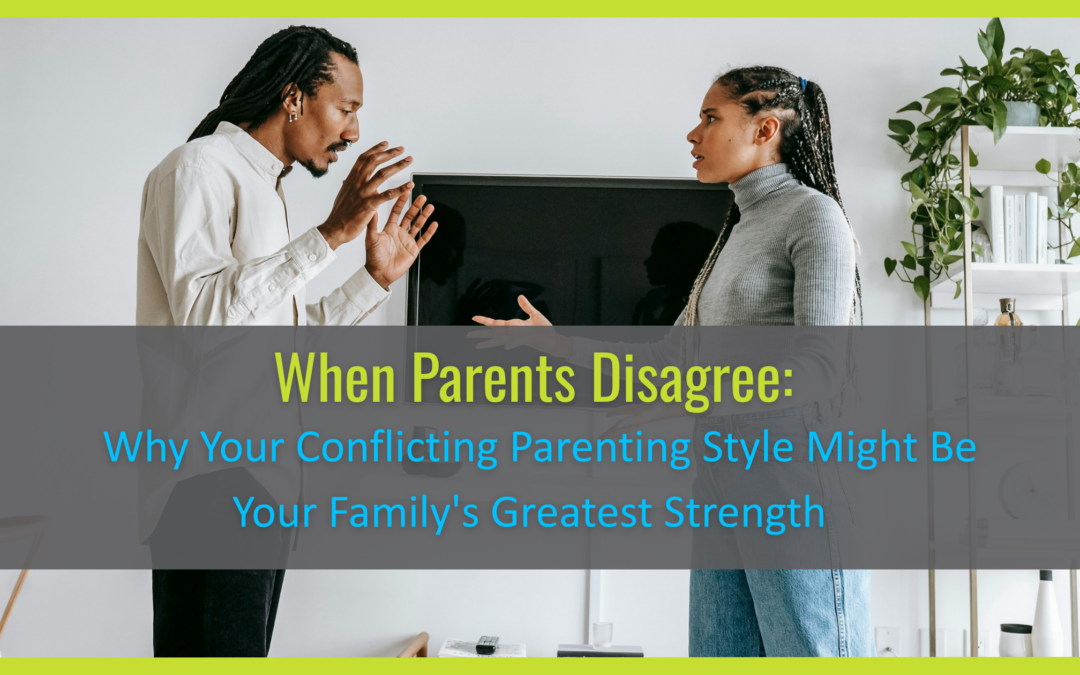
You're sitting across from your partner at the dinner table, and you can feel the familiar tension building.
Your child had a rough day. You wanted to give them space to decompress. Your partner thinks you let them off too easy.
If this sounds familiar, you're not alone. Conflicting parenting styles are one of the most common sources of friction between partners… and one of the most misunderstood. Most parents assume that disagreeing means someone is doing it wrong.
What if the opposite were true?
We sat down with Dr. Ann-Louise Lockhart, pediatric psychologist and parent coach, to talk about what actually happens in families where two parents approach things very differently, and what she shared might completely change the way you see your differences
When Conflicting Parenting Styles Feel Like a Battle in Your Own Home
Let’s start with a maybe-not-so-theoretical scenario:
Your child comes home from a rough day at school. They are quieter than usual, a little prickly, and they do not want to do anything you ask.
One of you reads the room and thinks, “They need some space tonight. The homework can wait.” The other one thinks, “If we let it slide now, they will expect it every time. They need to learn to push through.”
Neither of you is being unreasonable. Your desire and end goal are the same. You are both trying to love and protect your child. The problem is that you both have wildly different methods of achieving that goal.
The classic standoff: one soft parent, one firm parent
Dr. Lockhart told us she sees this scenario in her practice very regularly.
Often–though not always–it shows up as one parent who leans toward accommodation and emotional understanding, and the other parent leans toward structure and “let's build some grit.” Sometimes it is one parent against the other on nearly every decision, and the tension starts to feel personal.
When we are stuck in that standoff, it is easy to start keeping score of who is too soft, who is too harsh, and who is “undermining” whom.
Why "which one of us is right?" is the wrong question
Here is where Dr. Lockhart offered a real reframe.
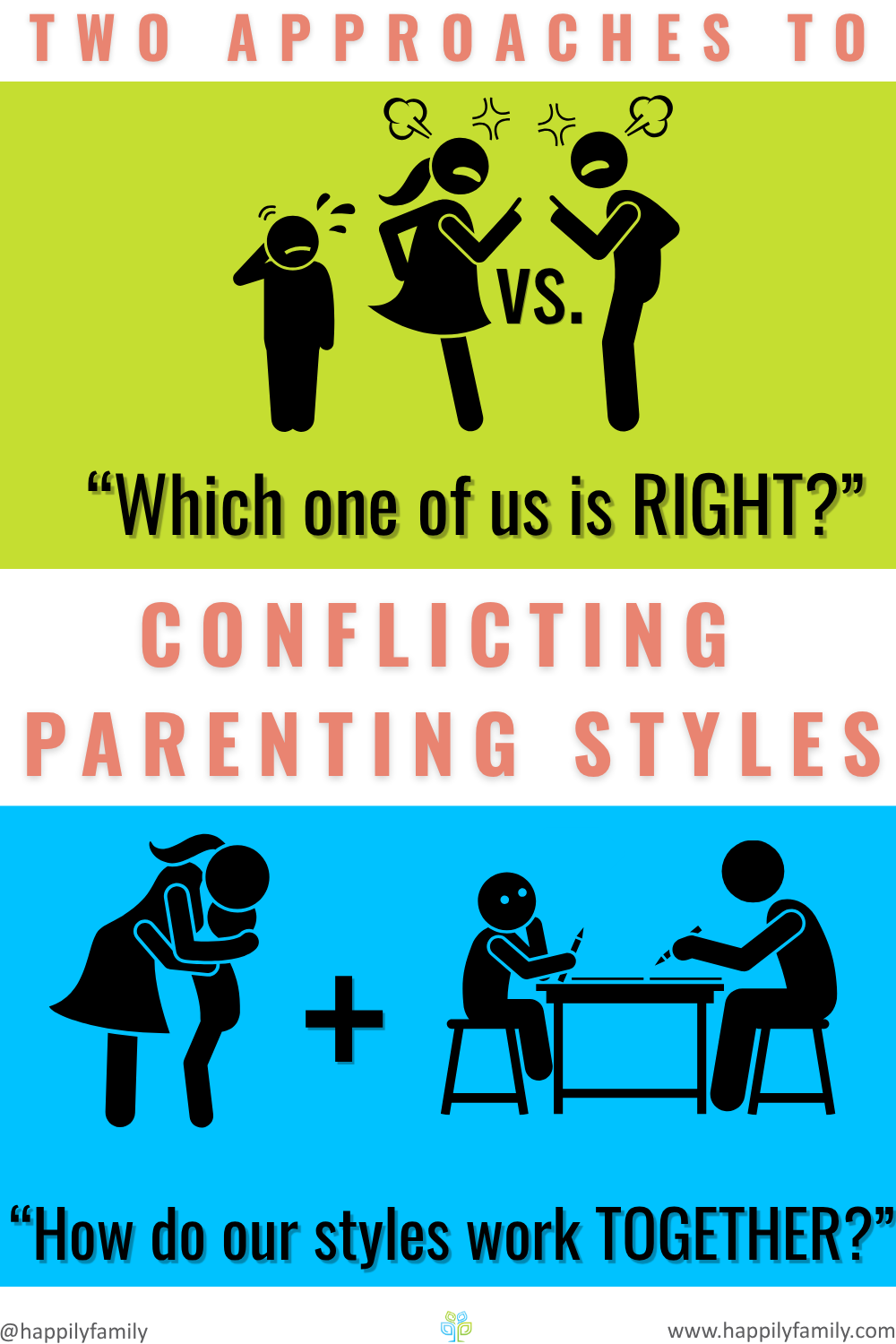
So often, she said, we approach these moments as either/or, when the truth is almost always “yes and.” It is okay that one parent is a little soft. It is okay that the other parent is a little firm.
Both of those things can be true at the same time, and both of them can be good. The question is not “which parenting style is right,” it is “how do these two styles serve our child together?”
That tiny shift, from either/or to “yes and,” takes so much pressure off. You are no longer two opponents trying to win, but two teammates with different strengths.
How differences in parenting styles get more extreme under stress
This is something most of us have experienced, but probably struggled to put into words.
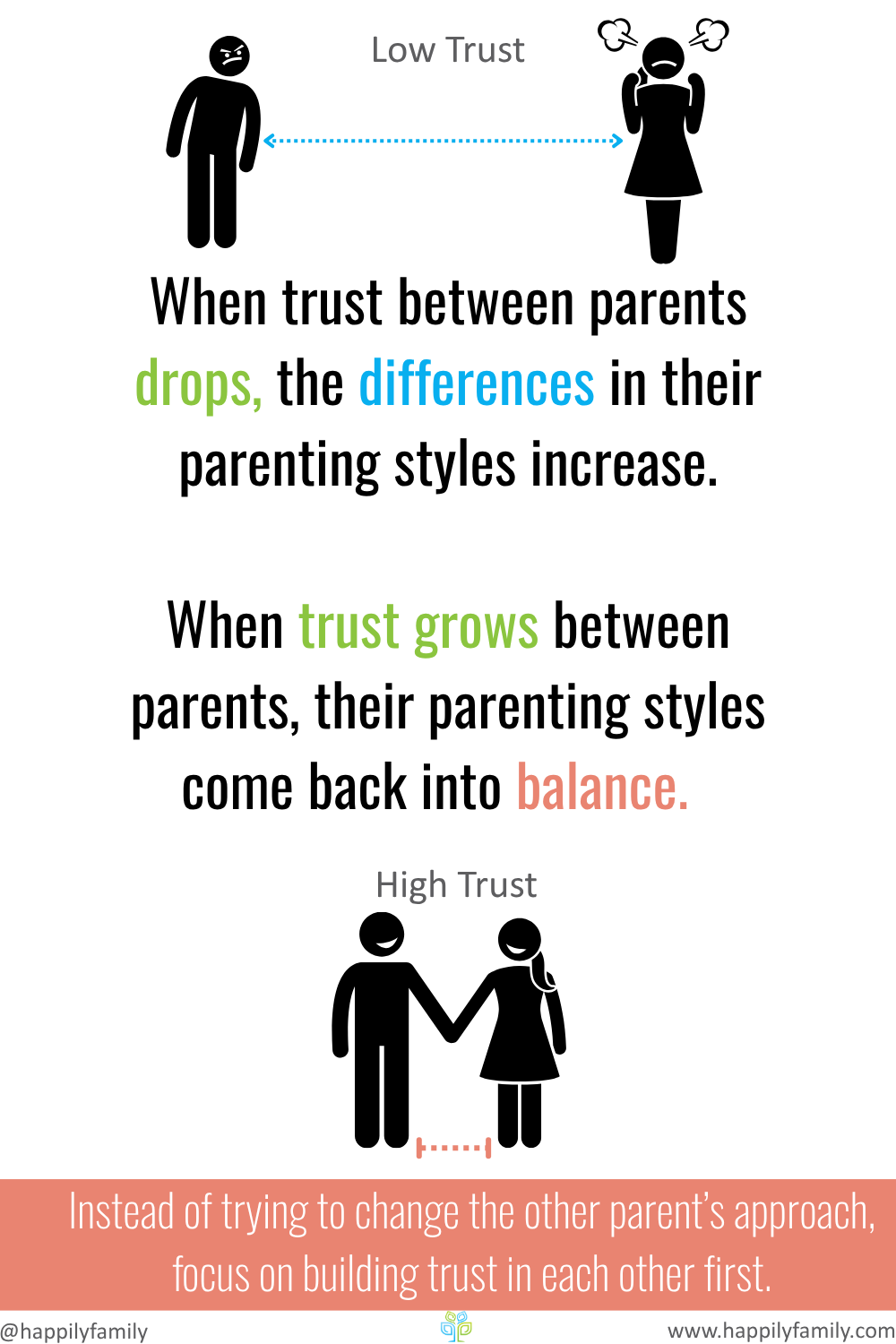
When we trust each other, we tend to drift toward the middle. But when we start doubting our partner, we dig in… and the gap between us gets wider.
The empathic parent starts to over-protect (because someone has to). The more structured parent starts to push harder (because someone has to). Suddenly, your differences in parenting styles look like a canyon, when really they grew that wide because the trust between the two of you has worn thin.
There is hope, however! That same dynamic works in reverse.
When you rebuild a little trust, you both relax back toward center, and the “conflict” shrinks on its own.
This is something most of us have experienced, but probably struggled to put into words.
When we trust each other, we tend to drift toward the middle. But when we start doubting our partner, we dig in… and the gap between us gets wider.
The empathic parent starts to over-protect (because someone has to). The more structured parent starts to push harder (because someone has to). Suddenly, your differences in parenting styles look like a canyon, when really they grew that wide because the trust between the two of you has worn thin.
There is hope, however! That same dynamic works in reverse.
When you rebuild a little trust, you both relax back toward center, and the “conflict” shrinks on its own.
The Hidden Benefits of Different Parenting Styles
Once you stop trying to flatten your differences, something interesting happens. You start to see what each of you is actually offering.
Because you and your partner approach things differently, you each bring a unique strength to the table.
Two roles, one team: validation and problem-solving
Picture that hard-day-at-school scenario again, but this time as a tag team instead of a tug-of-war.
The “empathic parent goes first: “That sounds really hard. I am so sorry that happened, and it makes sense that your feelings are hurt.” That is the moment your child feels seen, and it is the heart of why we connect before we correct.
Then the “structured” parent steps in, gently: “Yeah, that was rough. So next time something like that happens, what do you think you could do?” Now your child has both comfort and a path forward.
That is not two parents fighting. That is two parents covering for each other beautifully.
A soft place to land... and the tools to stand back up
Staying stuck in a big feeling does not actually help a child move through it. But skipping the feeling and jumping straight to “here's your action plan” does not work either.
Children need both. They need a soft place to land, and they need the tools to stand back up.
This is not just a nice idea; it holds up under research. The Center on the Developing Child at Harvard has found that resilience is built through a combination of supportive relationships and active skill-building, which is exactly the pairing your two styles create. One of you offers the warm relationship, the other helps build the skills, and together you are raising a resilient kid.
When conflicting parenting styles actually create balance
When you have that dichotomy, those opposite approaches, it can actually be a huge benefit, because it brings balance into the home. One of you keeps the family from becoming all rules and no warmth. The other keeps it from becoming all comfort and no growth.
Your child gets self-awareness AND grit. Accountability AND understanding. A safe place to express feelings AND the expectation that they can do hard things.
So those conflicting parenting styles you have been worrying about? In a home with enough trust, they are quietly doing the work of supporting a struggling child from two angles at once.
Where Our Differences Really Come From
If you want to soften the friction, it helps to understand why you parent the way you do in the first place. Because almost none of us chose our parenting style on purpose.
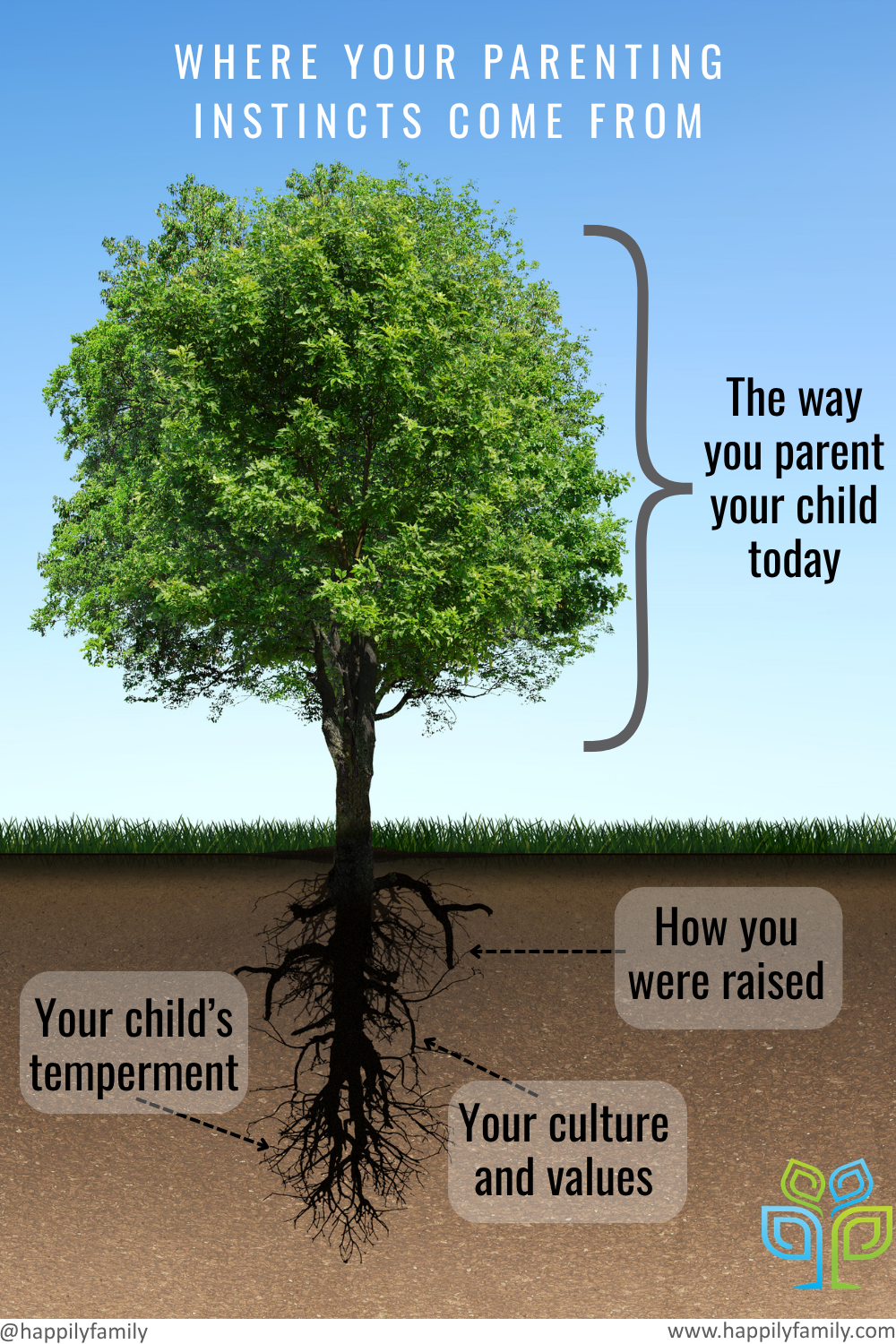
Most of us came into parenting carrying messages from our own childhood, often without realizing it.
Messages like “kids should do what they are told,” or “adults are always right,” or “big kids don't cry.” Many people never sit down and plan how they want to parent… they simply parent the way they were parented, and that does not always serve the child in front of them.
Others swing hard in the opposite direction, determined not to repeat what hurt them, and end up with very few limits at all. Neither approach works well, but awareness gives us a choice. We get to keep what we loved about our upbringing and lovingly leave the rest.
Cultural differences in parenting styles
Dr. Lockhart pointed out that these clashes are not only between a mom and a dad.
They also show up across cultures. When two partners come from different cultural or ethnic backgrounds, their instincts about emotion, discipline, independence, and respect can look very different… and those differences in parenting styles run deep.
Research bears this out, too. Reviews of parenting styles and their effects on children consistently note that culture shapes the values, language, and behavior we pass down. Naming where your instincts come from (without judging your partner's) can turn a clash into a conversation.
Parenting a highly sensitive child when you don't agree
This is where conflicting parenting styles can sting the most.
When you have a highly sensitive child, one parent might say to the child, “You need to toughen up.” This approach can be genuinely hard on that child. Many parents were raised to believe sensitivity was something to fix, simply because no one taught them about temperament.
If this is your family, please be gentle with each other. The “toughen up” parent usually is not trying to be harsh… they are passing on the only resilience playbook they were given. A little understanding here goes a long way.
Turning Conflicting Parenting Styles Into a United Front
So how do you take two different approaches and turn them into a team? It comes down to one quiet, powerful ingredient.
The trust factor in co-parenting
The whole thing rests on trust.
You do not have to agree on every method or use the same words. You just have to trust that your partner is thinking it through, that their intentions are good, and that you are both walking toward the same destination.
This is not a soft “just be nicer” idea, either. The Gottman Institute, after decades of relationship research, describes trust as believing your partner is acting in the best interest of the relationship… which is exactly the foundation co-parents need. When that trust is solid, your different styles support each other instead of competing.
Here is a piece that surprises a lot of parents.
Family systems researchers talk about how families try to maintain balance, a kind of homeostasis. When one parent leans very permissive, and the other leans very authoritarian, the system feels lopsided… and children, without meaning to, often start “playing off” that gap.
To a parent, this can feel like manipulation. But it is not about fault or blame.
Your child's nervous system is just trying to find something predictable in an uneven system. And by the way, even when you are sure you are hiding your disagreements (“I hide it really well,” one parent told us, smiling)… sensitive kids almost always pick up on the tension anyway.
That is not a reason for guilt. It is just one more reason that coming back to the center, together, matters so much.
Single parents: holding both sides within yourself
If you are parenting solo, this can feel like a tall order… and we see you.
You may not have a co-parent to play the other role, but you can still offer your child both sides. Some days you are the soft place to land, other days you are the steady “you've got this” coach, and learning to hold both within yourself is a real skill.
You can also lean on your village. Trusted teachers, grandparents, aunts, uncles, and family friends can each offer your child a slightly different flavor of support, widening the circle of people who help your child grow.
Staying rooted in shared values
The goal was never to parent in exactly the same way. The goal is to parent in a way that complements each other while staying rooted in the same core values.
Pick a few non-negotiables you both believe in… maybe kindness, honesty, and responsibility. Once you agree on those, you can give each other freedom in the how, and trust that your different styles are bringing balance, not breaking it.
And remember, parenting is not a stage you graduate from. The differences in parenting styles that show up in the toddler years will show up again in the teen years, just with higher stakes. If you have a tween or teen at home, our free Parent Teen Connection Conference gathers experts to help you keep that bond strong, even through their eye-rolling adolescent years.
You truly were never meant to figure all of this out alone. That is the heart behind our community and our free events, including the Happily Family online conference, where dozens of experts, authors, and educators come together to support parents who care as much as you do.
When you and your partner can trust each other, support each other's strengths, and stay anchored to shared values, your conflicting parenting styles stop being a source of conflict… and start being the balanced, whole-hearted gift your child gets to grow up inside.
Common Questions From Parents Like You
Q: What should we do if we have different parenting styles?
Start with your shared values instead of your daily disagreements. Ask each other, “What do we both want for our child in the long run?” When you can agree on a few core values (like kindness, resilience, and responsibility), you can give each other room to reach those values in your own way. Most conflicting parenting styles soften the moment couples stop competing and start trusting that they are on the same team.
Q: Are different parenting styles actually bad for kids?
Not necessarily. When parents tear each other down in front of the child or constantly undermine each other, that tension is hard on kids. But when each parent simply brings a different strength (one offering comfort, the other offering structure), those differences in parenting styles can give a child the best of both worlds… emotional safety and the skills to handle life's challenges. The key is mutual respect, not identical methods.
Q: How can a single parent provide both nurturing and structure?
Single parents can absolutely offer both; it just means holding both roles within yourself at different moments. Some days you are the soft place to land, and other days you are the steady coach who says, “You can do hard things.” It also helps to lean on your village… trusted teachers, family members, and friends who can each offer your child a different kind of support and perspective.