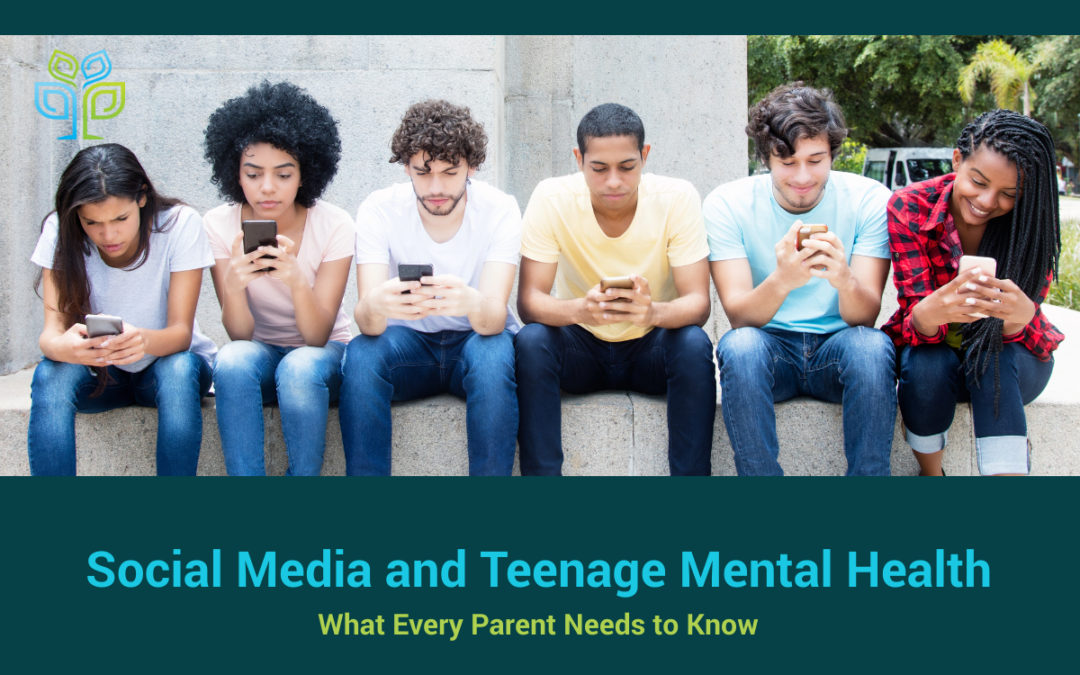
Are you worried about how social media is affecting your teenager?
You're not alone. We surveyed 229 parents of teens and tweens, and here's what they told us:
“My teens expect that their phone will be with them 24/7. When they argue with me, how do I stay strong with my beliefs about social media?”
“Getting our 16-year-old his own phone has been a disaster. I have not been able to re-establish time limits.”
“Too much screen time has affected their behavior and mood. Screens are impacting the family relationships and the emotional climate of our home.”
If any of that sounds familiar, take a deep breath. The relationship between social media and teenage mental health is something that parents everywhere are trying to figure out… and the fact that you're here, looking for answers, already says so much about how deeply you care.
To help make sense of it all, we sat down with Max Stossel, an award-winning spoken word artist and former tech insider who used to run social media for big brands. Max actually helped design some of the very notifications that were created to keep people scrolling. But he left the tech world, and through his organization Social Awakening, he's spent the past eight years speaking with over 100,000 students, parents, and educators around the world about what social media is really doing to us.
In other words, Max knows how these platforms work from the inside. And what he shared with us about social media and teenage mental health was both eye-opening and genuinely helpful for parents navigating this challenge.
We've included the interview at the end of this blog post – click here to skip ahead and watch it first.
Why Social Media Is So Hard for Teens (and Adults) to Put Down
Let's start with something that might actually make you feel better: if your teen can't put their phone down, it's not because they lack willpower, and it's not because you've done something wrong.
According to Max, what we're really dealing with here is addiction… but a far more complicated kind than we're used to.
Max gave us this analogy: “[Imagine]… if you had to go inside of a bar, or even [use] a bottle [of alcohol], to talk to your friends and do your work. If you carried that bottle around 24 hours a day, seven days a week, and if that bottle was being updated every day to be more personally delicious for you… I think a lot more of us would be having drinking problems.”
That image really stuck with us. Because that's essentially what social media is for teenagers today.
Their social lives, their schoolwork, their connections, their entertainment… it all lives inside the same device. And as Max pointed out, social media is just “the norm of how kids are communicating,” which means asking a teen to step away from it can feel like asking them to give up their entire social world.
How Personalized Technology Fuels the Addiction
One of the things Max explained that surprised a lot of parents is just how precisely these social media platforms are tracking our kids. He told us that “just about everything we do on a device is more or less tracked.”
Every click. Every pause on a video. Every profile visit. How long your teen spent looking at something in their feed, even if they didn't tap on it.
All of that gets fed into what Max described as “a big system of data, a big computer calculating, crunching all those numbers and doing its best to figure out… based on your behavior and the behavior of other people like you” exactly what content will keep you scrolling.
He put it bluntly: “If we don't pay for these products, we are the product. We are the thing being sold. Our time, our attention, and our data arethe ways that these companies are making money off of us.”
And while that makes social media platforms free to use, Max says it “can create these really complicated challenges, often mental health issues, addiction, and things like that.”
This is why so many parents we work with share that screens feel like one of the hardest things to navigate right now.
One parent told us, “We don't have good boundaries for how much time my kids spend on social media, their computer, and phone. Media contracts and agreements are not working.”
It makes sense, because we're not just competing with a game or an app. We're up against billions of dollars of technology designed to capture and hold attention.
Why Teens Are Especially Vulnerable to Social Media
What makes social media and teenage mental health such a pressing concern is something Max was quick to point out. He explained, “They haven't had the time of social development or life outside of this. This just has been often the norm of what socialization is like, which is so different from how often these kids' parents grew up.”
On top of that, their brains are still developing. Max noted that adolescence involves going through “phases of identity and of development,” which makes teens uniquely susceptible to the pull of these platforms. The American Psychological Association has issued a health advisory specifically about adolescent social media use, echoing these same concerns about how social media platforms interact with the developing teenage brain.
So when we see our teens glued to their phones, it helps to remember: it's not a character flaw. It's a developing brain meeting a billion-dollar industry.
How Social Media Impacts Teenage Mental Health
So what does this actually look like in our kids' lives? We asked Max to walk us through the specific ways social media is affecting teen mental health. The picture is nuanced, but there are patterns that every parent should understand.
Body Image, Comparison, and the Filter Effect
One of the biggest concerns around social media and teenage mental health, especially for young girls, is the constant cycle of comparison. Max told us that while beauty standards in media aren't new, what's different now is the sheer relentlessness of it.
He described how a young girl can open a filter and see a live side-by-side of her own face and a “supermodel version” of herself… As Max put it, teens are “basically telling [themselves] over and over again the way [they] look is not good enough. [They] have to justify it for the internet to be good enough to get the likes, the hits, and attention.”
And it gets worse. Max explained that “the things that get the likes and views and attention are often the more sexualized or the more ridiculously beautified versions of these images.” For teens who are still forming their identity, this creates an incredibly distorted picture of what “normal” looks like.
The U.S. Surgeon General's advisory on social media and youth mental health backs this up, noting that frequent social media use is associated with changes in parts of the brain related to emotions and learning, and can significantly affect body image, self-esteem, and emotional regulation. And recent data from the Pew Research Center found that teen girls are more likely than boys to say social media has hurt their mental health, their confidence, and their sleep.
The Loneliness Beneath the "Connection"
Here's something Max shared that really stopped us in our tracks. He described a conversation he had with a group of students where one teen asked him point blank: “Would you rather have the synthetic relationships or nothing?”
Max replied to the teen, “I really hear that. And if you were to pose it that way, for me, I'd rather have the synthetic relationships. But I don't believe that's the choice. I believe that's a false choice.”
He went on to explain what he thinks is actually happening to teens: “We have this thing that sort of feels like a connection but isn't quite it. And often leaves us feeling… “good enough”, but not any kind of deep sense of meaning and fulfillment.”
In other words, teens are getting just enough digital contact to feel like they're not totally alone, but not nearly enough to feel truly connected. And Max told us this is reflected in the data: there's been “a giant mental health spike in teens with highly depressive symptoms, self-harm, suicide.”
He also cited studies showing that “the later kids are getting their first smartphone, the better their mental health is across a number of different dimensions.”
If you're feeling the weight of all this, you're not the only one. Many parents struggle with staying calm and regulated when they see their child being pulled into screen use that doesn't seem healthy. Our free guide to staying calm in stressful parenting moments can help you find your footing so you can show up for these conversations from a grounded place.
Social Media Habits That Put Teens at Higher Risk
Not all screen time affects teens the same way. Max helped us understand some of the specific social dynamics that make certain social media platforms particularly tricky for teenagers.
For example, he shared that Snapchat has become the number one messaging app for teenagers. “‘What's your Snap' has often become ‘What's your number?'” Max explained. And Snapchat's default Snap Map feature lets teens physically see where their friends are at all times… which means they can literally watch when friends are hanging out without them.
As Max described it, social media creates “all these extra little elements of confusing social dynamics” where “all the [drama] of high school and middle school” follow kids home from school. It's the kind of thing that makes the already complicated world of adolescence feel relentless.
Some social media habits–that research suggests put teens at higher risk–include spending more than three hours a day on social media platforms, using screens right before bed (which disrupts sleep, a critical factor in teenage mental health), following accounts that promote unrealistic body standards or risky behavior, and relying on social media as a primary way to cope with difficult emotions.
What Parents Can Actually Do About Social Media and Teenage Mental Health
If you've read this far, you might be thinking, “Okay, I get it. But what do I actually DO?” That's the question we hear most from parents. The good news is that Max had some really encouraging insight here, too, and there's a lot you can do.
Start with Connection (and Honesty), Not Control
The most important thing you can do isn't to take away the phone (although limits absolutely have their place). It's to build and maintain a relationship where your teen feels safe talking to you about what's happening in their digital life.
And one of the most powerful starting points? Being honest about your own struggles. Max made the point that this isn't just a kid problem, and that parents need to own that. He told us that “a lot of times parents are like, ‘these kids, you know, the kids are all hooked on this stuff.' And it's like, yeah, just the kids are hooked on this stuff. Okay. When really it's… it's all of us.”
When we talked to parents we hear: “My number one parenting challenge is me wanting to connect with my daughter and not being sure if she wants to connect with me.” Another parent shared, “Defining boundaries for my 17-year-old is really tough. He thinks he knows what is best for him and does not want me to tell him what to do.”
These feelings are so real. And what we've learned is that teens who have a warm, connected relationship with their parents are better able to self-regulate, make thoughtful choices, and come to their parents when something goes wrong online or offline.
We've put together 12 conversation starters to help you talk to your kids about social media and mental health. These conversation starters aren't about making kids feel guilty or defensive. They're about engaging your child to be more thoughtful about how technology is working for them (or not).
Help Teens Rebuild What Social Media Has Replaced
One of Max's most hopeful observations was about what kids actually need, and it isn't another rule or screen time contract. It's more real-world experience.
Max reminded us that “in the olden days, if we were really bored or really not happy with something, we had to kind of figure out what the heck we were going to do about it. Whether it's going out and figuring out some new game to play with our siblings, or going outside and making mistakes.”
The point isn't nostalgia. It's that social media has quietly replaced the discomfort that used to push kids toward creativity, problem-solving, and real connection. Max said teens now “have just enough [entertainment] to keep us docile. We have this thing that sort of feels like connection but isn't quite it.”
So alongside whatever screen time agreements your family creates, think about what else your teen has access to. Opportunities for face-to-face connection with friends. Physical activity. Creative outlets. Time to be bored. These aren't extras. They're essential counterweights to the pull of social media platforms.
Think Long-Term: Self-Regulation Over Policing
When it comes to managing screen time, many parents are tempted to default to strict rules and monitoring. And while setting limits is an important part of digital parenting, it's worth asking: what's our long-term goal here?
Ultimately, we want our kids to be able to recognize how social media impacts their feelings and to make thoughtful choices about their own use. That means gradually helping them build self-regulation skills, not just imposing rules they'll abandon the moment they leave home.
Think of it like teaching a child to drive. You don't hand them the keys on day one, and you also don't refuse to ever let them behind the wheel. You start in a parking lot, move to side streets, then highways… with increasing independence at each stage. The same approach works with digital parenting.
If you're navigating the teen years and want expert guidance on staying connected with your teenager through challenges like this, check out our Parent-Teen Connection class for practical tools and strategies that actually work.
You Don't Have to Figure This Out Alone
The relationship between social media and teenage mental health is one of the defining parenting challenges of our time. It's complicated, it's evolving, and it touches nearly every family.
But here's what we want you to take away from this: you are not failing. The fact that you're reading this, thinking about this, and looking for ways to support your teen? That matters more than you know.
Your child doesn't need you to have all the answers about social media and teenage mental health. They need you to stay curious, stay connected, and keep showing up… even when it's messy.
And if you're looking for more support, more tools, and a community of parents who get it, we'd love for you to join us at the Happily Family Online Parenting Conference. You'll hear from experts (like Max!), connect with other families, and walk away with real, actionable strategies you can use today.
Because parenting is tough. But you don't have to do it alone.
Common Questions From Parents Like You
How does social media affect teenage mental health?
Social media can impact teenage mental health in several ways. As Max Stossel explained in our interview, the combination of addictive platform design, constant social comparison, and the replacement of real-world connection with “synthetic relationships” creates a perfect storm undermining teen well-being. Research shows connections between heavy social media use and increased rates of anxiety, depression, poor body image, and disrupted sleep among teens. However, social media can also have positive effects when used purposefully, such as helping teens find supportive communities. The key is helping your teen develop awareness about how their specific social media habits are affecting them.
At what age should I let my child use social media?
Most social media platforms require users to be at least 13, but many experts (including Max Stossel) point to research showing that the later kids begin using social media, the better their mental health outcomes tend to be. Rather than focusing on a single “right” age, consider your individual child's maturity, emotional regulation skills, and your family's values. Start with guided access and open conversations, and gradually increase independence as your teen demonstrates they can navigate these platforms thoughtfully. Our conversation starters for talking to kids about social media can help you get those discussions going at any age.
How can I talk to my teen about social media without pushing them away?
The most effective approach is to lead with curiosity rather than control. Instead of lecturing or imposing rules first, ask open-ended questions about their experience: What do they enjoy about it? How do they feel after scrolling? Have they noticed anything that bothers them? As Max pointed out, it also helps to be honest that adults struggle with this too, rather than framing it as purely a “kid problem.” When your teen feels like you're on the same team (rather than being the phone police), they're much more likely to open up and develop their own critical thinking about their screen use.