Recently, a parent wrote in asking for help with her kids…
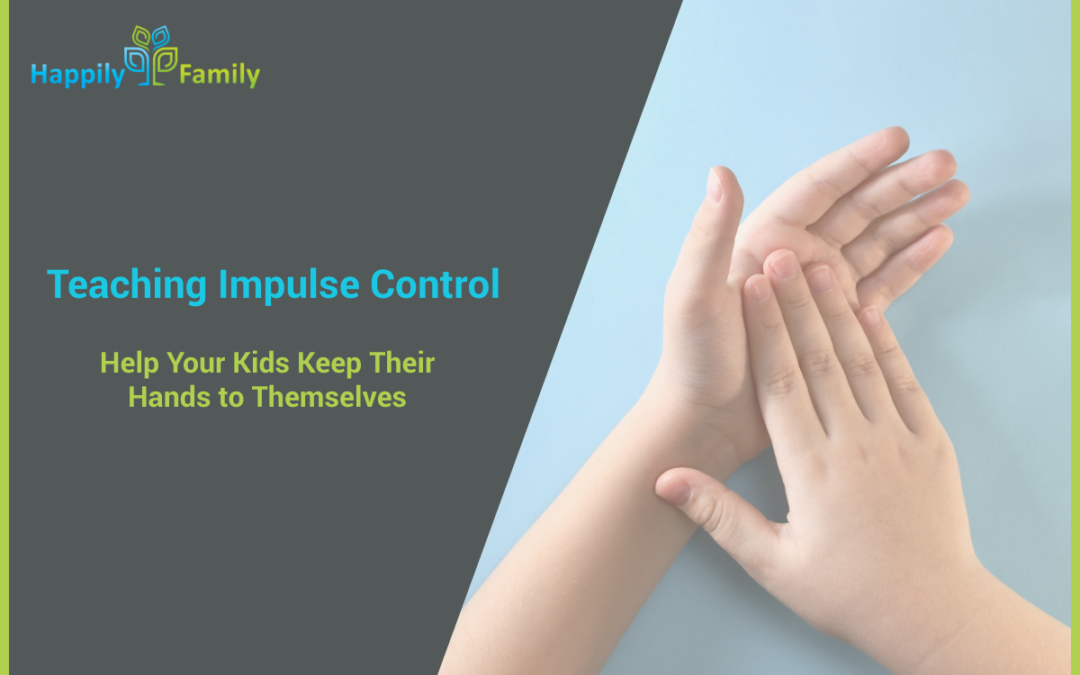
“How do I teach them to keep their hands to themselves (not poking, tickling, etc.) when the other says “no”? And how do I get my child to listen when their sibling asks them to “stop”?”
What this mom is asking about goes beyond just stopping her child's unwanted behaviors. It's really about supporting her child's development of impulse control.
Teaching impulse control is one of the most important (and challenging!) parts of parenting. When a child can't seem to stop a behavior even when they know they should, it's easy to feel frustrated.
But here's what we've learned from years of working with families: all behavior is an attempt to meet a need. Understanding this truth changes everything about how we approach impulse control activities with our children.
Why Children Struggle with Self-Control
Before we can help our kids develop better impulse control, we need to understand what's happening beneath the surface. When your child keeps poking their sibling during homework time or can't resist grabbing a toy from a friend, they're not trying to be difficult.
Their developing brain is still learning to manage big feelings and desires.
Executive function—the brain's ability to plan, focus, and regulate behavior—develops gradually throughout childhood. This is why teaching impulse control requires patience, repetition, and most importantly, compassion.
The Hidden Message Behind the Behavior
When a parent sees unwanted behavior, often the first instinct is to try to stop it immediately. But we’re going to propose that you do something counter-intuitive. Here it is: Before you address the unwanted behavior, take a moment to observe your child and ask yourself why your child is acting that way. What need is your child attempting to meet?
Maybe your son pokes his sister while she does homework because he wants to play with her. Perhaps your daughter can't stop touching things in the store because she's bored or overwhelmed.
Once you understand the “why” behind the behavior, you can help your child find more effective ways to meet that need. This approach to teaching impulse control addresses the root cause rather than just the symptom.
What Child Development Tells Us
Children aren't born knowing how to regulate their impulses—it's a skill they develop over time with support from the adults in their lives. They also begin to develop the ability to use impulse control around age 3.5 to 4 years old.
If your child is younger than that, your best course of action might be to avoid situations where following their impulses could lead to frustration (the candy aisle in the grocery store) or danger (playing with a ball where it could easily roll into a busy street). Self-control is truly a skill that blossoms over time when given the right environment.
As your child's ability to monitor and modulate their actions grows, you can set them up for success by involving them in the process of developing impulse control strategies. Research shows that kids are more likely to follow through with solutions they've helped create rather than ones imposed on them.
When you think about it, true self-control exists only when it's motivated from within—also known as “intrinsic motivation.” If self-control is motivated by external rules, it's “extrinsic motivation”.
Teaching Impulse Control Through Connection
At Happily Family, we believe in working with children rather than doing things to them. When it comes to impulse control, this means creating a collaborative environment where your child feels understood and supported.
Create Agreements Together
One of the most powerful impulse control strategies we've discovered is the family agreement. Instead of rules imposed from the top down, agreements are created collaboratively with your kids, written down, and signed by everyone.
Ask your children how they want to phrase the agreement. This sends the message “we are working on this together” and builds trust for future conversations.
For example, if your child struggles with keeping their hands to themselves, sit down together and ask: “What do you think would help you remember to be gentle with your sister's body?” You might be surprised by the thoughtful solutions they offer.
We cover more about creating agreements with your kids in this blog post.
Use Positive Language
Rather than making agreements about what kids don't want, help them come up with what they do want.
Instead of saying “No yelling,” try “Use indoor voices. Yelling hurts my ears.” Rather than an agreement about “Don't poke me after I've told you to stop,” maybe it can be about “Stop means stop.”
This shift in language is crucial for teaching impulse control because it gives children something to do rather than something to avoid. Using positive language also reminds kids of different strategies they can use in tough situations.
Be Specific and Flexible
When creating agreements, use specific language. Rather than “We agree to be nice,” say “I will ask before touching someone else's things.”
But remember—agreements aren't set in stone. If an agreement isn't working, it doesn't mean you give up. It means you haven't found the right agreement yet.
Keep your sense of humor, get creative, and stick with the problem together.
Impulse Control Activities That Actually Work
Teaching impulse control doesn't have to feel like work. There are plenty of activities that help children build these skills while having fun.
Address the Underlying Need
The most important part of teaching impulse control is identifying what your child is really trying to communicate.
If you observe and say to yourself, “When she sits down to do her homework and he starts poking her, maybe he wants to play with her?”—then you've found your starting point. Have a conversation with your child about it: “I see you're poking her while she's doing homework. What are you really trying to say to her?”
Then work together to find a more effective way to meet that need.
Talking with your kids about what they are feeling can be really helpful for this step too. We have a blog that covers 7 ways to talk to your child about their feelings that can give you even more insight into this step.
Practice "Stop Means Stop"
Teaching children that “stop means stop” is a fundamental impulse control activity that applies throughout life. A great way to build the neural pathways that allow children to pause and think before acting is through play and games.
Try playing games together at home—like “freeze dance” or “Simon Says”—where you and your child have to start and stop on cue while practicing thinking before acting.
(If you have kids 12 or under, “The Floor Is Lava” by The Kiboomers is a seriously fun option for some family play time and impulse control development.)
Another great option is “Red Light/Green Light” on walks or around the house. If your child gets used to playing this at home, “red light” can become a helpful cue to stop them in situations where their impulse control is failing and they need you to intervene.
Offer Alternative Strategies
When your child feels the urge to act impulsively, they need somewhere to redirect that energy. Help them identify alternatives that work for them.
Some children might jump on a trampoline. Others might scribble on paper or squeeze a stress ball. The key is finding what works for your child and practicing these strategies when they're calm, so they're available during challenging moments.
Supporting Your Child's Success
Teaching impulse control is a marathon, not a sprint. There will be setbacks and frustrations along the way—for both you and your child.
Respond with Empathy
When your child struggles with impulse control, it's easy to respond with frustration: “How many times do I have to tell you?” or “You know better than that!”
But these responses don't actually help children develop better control. Instead, try validation: “You're having a hard time keeping your hands to yourself right now. That's tough.”
Remember, feelings aren't right or wrong—they just are. Our job as parents is to help our kids express their feelings in ways that work for them and the people around them.
Keep the Long View
The skills you're helping your child develop now—impulse control, emotional regulation, problem-solving—will serve them throughout their lives. This work matters, even when progress feels slow.
Be gentle with yourself, too. Most of us get very little support and preparation to meet the emotional demands of parenting. You might feel alone or like you're doing it wrong sometimes.
We've been there! And we are not perfect parents—even today (ask our kids!).
(If the problems feel bigger than either of you can navigate right now, have a read through our blog on navigating unfixable situations with your child for some more support.)
Stay Connected
Teaching impulse control ultimately comes back to connection. When children feel understood and supported, they're more motivated to develop better self-regulation.
Make sure you're filling your child's “connection tank” with one-on-one time, play, and genuine interest in their world. A connected child is a cooperative child.
Moving Forward Together
Teaching impulse control ultimately comes back to connection. When children feel understood and supported, they're more motivated to develop better self-regulation.
Make sure you're filling your child's “connection tank” with one-on-one time, play, and genuine interest in their world. A connected child is a cooperative child.
Common Questions From Parents Like You
When do children learn impulse control?
Children begin developing impulse control around age 3.5 to 4 years old, though the skill continues to mature well into adulthood. According to Zero to Three, a leading early childhood development organization, the part of the brain responsible for controlling emotional impulses is not well developed until age 3 or 4—and even then, children still need significant help managing their emotions and impulses.
Research published in the National Institutes of Health shows that impulse control continues to mature as the frontal lobe develops, with significant improvements occurring around ages 7-8 and again at ages 9-12. The prefrontal cortex, which governs executive function and impulse control, doesn't fully mature until the mid-to-late 20s.
This means that while you can begin teaching impulse control in the preschool years, patience and ongoing support are essential throughout childhood and adolescence.
What are some activities to teach impulse control?
Some of the most effective impulse control activities for children are classic games that require stopping, starting, and listening carefully. These include:
- Freeze Dance: Children dance freely to music and must freeze when it stops, building the ability to control their bodies on cue.
- Red Light/Green Light: Players move forward on “green light” and must stop immediately on “red light,” practicing instant body control.
- Simon Says: This game requires careful listening and only acting when the specific phrase is used, teaching children to pause before responding.
- Jenga: The slow, careful movements required help children practice patience and deliberate action.
According to Harvard's Center on the Developing Child, games that involve rules, turn-taking, and self-regulation help strengthen executive function skills. The key is making practice fun and doing these activities regularly when your child is calm—so the skills become available during challenging moments.
What are some activities to teach impulse control?
Yes, difficulty with impulse control is one of the core characteristics of ADHD (Attention Deficit Hyperactivity Disorder). According to CHADD (Children and Adults with Attention-Deficit/Hyperactivity Disorder), the leading ADHD support organization, children with ADHD often act without thinking because their brains process impulses differently.
As clinical psychologist Dr. Kimberly Harrison explains, children with ADHD aren't being willfully disobedient—the impulsive behavior is the result of neurobiological differences that make it harder to pause and consider consequences before acting.
The good news is that impulse control can improve with targeted support. ADDitude Magazine recommends strategies such as clear expectations, predictable routines, positive reinforcement, and visual reminders. Children with ADHD often need adult support longer than other kids, but with patience and the right strategies, they can develop better self-regulation over time.
And if you're parenting a teen who struggles with impulse control, check out the Happily Family Teen Conference—designed specifically to help you navigate the unique challenges of adolescence.